


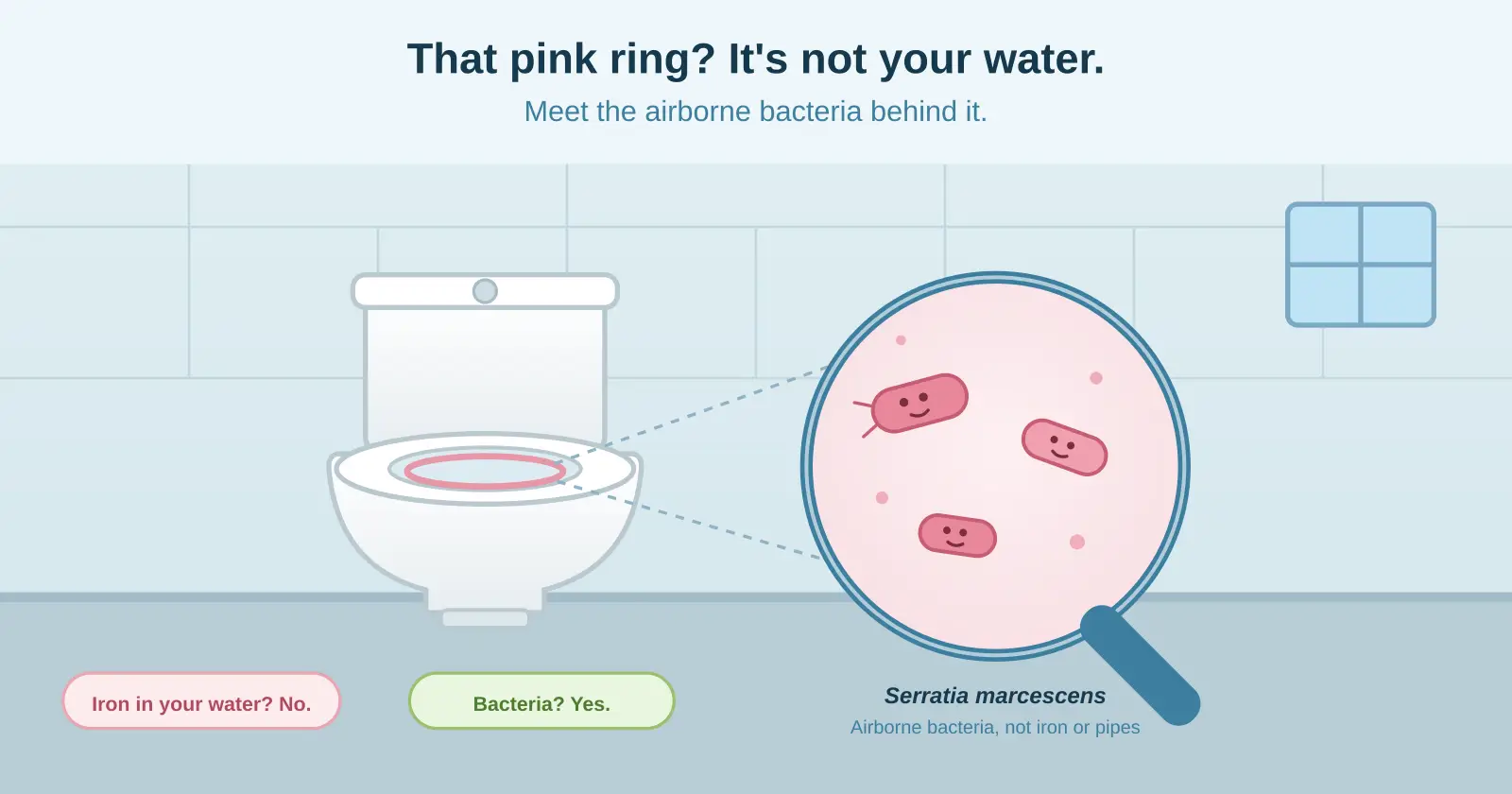
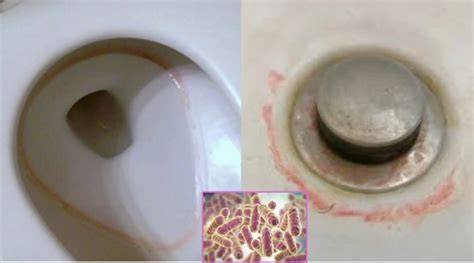
If you keep finding a red ring in your toilet bowl, sometimes pink and sometimes a deeper rust-red, you are not alone, and you are probably blaming the wrong thing. Most people assume it is iron or hard-water mineral buildup and reach for a heavy-duty cleaner. In reality, that ring almost certainly has nothing to do with your water quality.
It Is Bacteria, Not Iron
The ring you are seeing is caused by a type of airborne bacteria called Serratia marcescens. It is naturally present in the environment and thrives in damp, dark spaces, which describes the inside of a toilet bowl pretty well. As the bacteria grow, they produce a pinkish-red pigment, and that is the ring you keep scrubbing away.
It is not coming from your pipes, and it is not a sign that your water is contaminated. It is simply bacteria doing what bacteria do when they find a comfortable home.
Why Some Toilets Get It and Others Do Not
The most common reason a toilet develops this ring is low usage. When a toilet sits unused for several days, whether a guest bathroom, a vacation home, or a bathroom that just does not get much traffic, the water in the bowl stays still long enough for bacteria to colonize the surface. Regular flushing disrupts that cycle and keeps the ring from forming.
High humidity in the bathroom can also contribute, since the bacteria need moisture to grow.
What Actually Helps
Cleaning the bowl regularly and keeping it dry between uses will slow things down. Some people add a small amount of hydrogen peroxide to the tank periodically, which can help reduce bacterial growth without damaging the toilet’s internal components the way bleach tablets sometimes can.
If you are seeing the ring in multiple toilets throughout the house, or if it returns very quickly after cleaning, it is worth making sure your bathroom ventilation is doing its job.
When It Really Is Your Water
If you are noticing other signs, such as a metallic taste, an odor, rust-colored staining on fixtures, or spotting on dishes, that is a separate conversation worth having. Those point to genuine water-quality issues, and our water treatment services can pinpoint what is going on. We are happy to test your water and walk you through exactly what we are seeing.