

You have dialed in your grind size. You are buying good beans. You are even watching your brew temperature. And still, the coffee at your favorite shop just tastes better. There is a good chance your water affects how your coffee tastes more than almost any other variable in your kitchen.

pH Matters More Than You Think
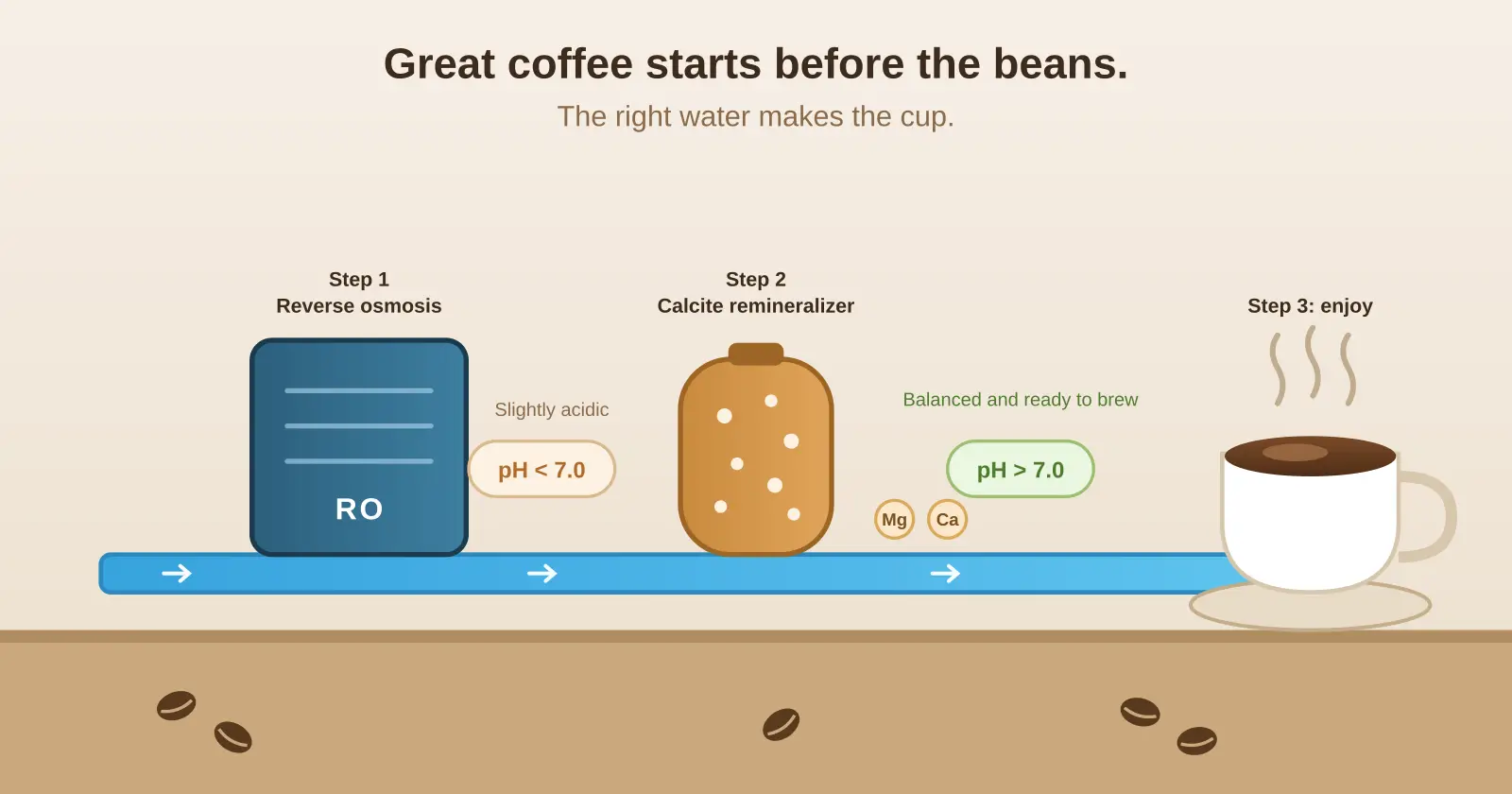
Water that comes out of a reverse osmosis system tends to be slightly acidic, often falling below a pH of 7.0. That might not sound like a big deal, but coffee extraction is sensitive to it. Specialty coffee experts generally agree that water with a pH above 7.0 pulls more of the desirable flavor compounds from the grounds. Acidic water can leave your coffee tasting flat, sour, or hollow even when everything else is done right.
The Mineral Factor
Pure water sounds ideal, but stripped-down water is actually too aggressive. Minerals like magnesium help extract the flavor compounds that make coffee taste rich and complex. Water with zero dissolved solids does not do that job well. That is why the best cup of coffee is not made with distilled water. It is made with water that has the right mineral balance.
What We Do About It
When we install a reverse osmosis system, we offer a remineralizer as part of the setup. It adds a small amount of calcite back into the water after filtration, which raises the pH above 7.0 and puts just enough minerals back in to make your coffee taste the way it should.
It is a small detail that makes a real difference, not just for coffee, but for the taste of your water straight from the tap. You can see the full range of systems on our water treatment services page.
If you have been living with flat-tasting water and assuming that is just how it is, we would love to show you what a difference the right system makes.