

Many homeowners ask how ionization improves indoor air quality and whether it can really make a difference in dust, allergens, and everyday comfort. The short answer is yes—when used correctly, ionization can be a helpful part of a complete indoor air quality plan.
Ionization is not a replacement for filters or maintenance, but it can support your HVAC system by helping airborne particles become easier to capture. For homes dealing with dust, pet dander, odors, or allergy concerns, it may be worth considering alongside other Indoor Air Quality Solutions.
What Is Ionization?
Indoor air often contains microscopic particles such as:
- Dust
- Pet dander
- Pollen
- Smoke residue
- Mold spores
- Other airborne debris
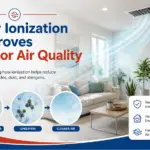
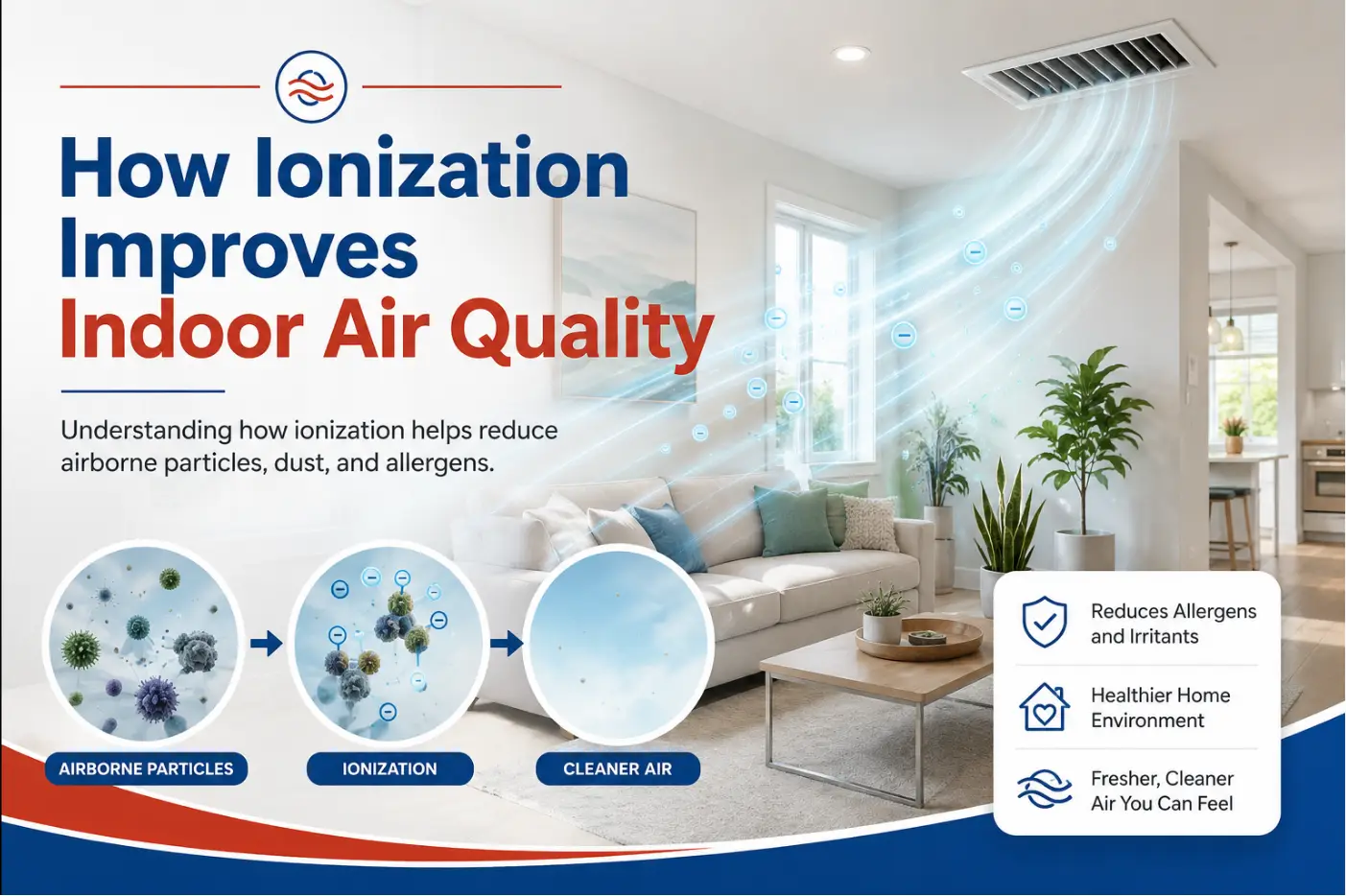
Ionization technology works by producing charged ions that move into the airflow. These ions attach to tiny airborne particles and give them an electrical charge.
Once charged, particles are more likely to attract each other and form larger clusters. Larger particles are easier for your HVAC filter to trap and easier to remove during routine cleaning.
That is the basic science behind how ionization improves indoor air quality.
How Ionization Works in Your HVAC System
A whole-home ionization unit is typically installed inside your ductwork or air handler so it works with the airflow already moving through your heating and cooling system.
Step 1: Ions Are Released
The device generates positive and/or negative ions as air passes through the system.
Step 2: Ions Attach to Airborne Particles
Dust, pollen, smoke, and other tiny contaminants pick up an electrical charge.
Step 3: Particles Clump Together
Charged particles begin sticking to one another, creating larger clusters.
Step 4: Your Filter Captures More
Those larger particles are easier for your HVAC filter to remove from circulation.
This process can lead to cleaner-feeling air and fewer particles floating through the home.
Benefits of Ionization for Your Home
When properly installed, ionization can offer several practical benefits.
Less Airborne Dust
Many homeowners notice less visible dust settling around the house because more particles are being captured by the filtration system.
Better Support for Allergy Concerns
Reducing airborne particles may help lessen irritation caused by pollen, pet dander, and dust.
Improved Filtration Performance
Ionization does not replace filters—it helps make filters more effective by giving them larger particles to catch.
Fresher Indoor Environment
Some advanced systems are designed to help reduce certain odors and contaminants as part of a broader indoor air quality strategy.
What Ionization Does Not Replace
It is important to be realistic about what ionization can and cannot do.
Ionization does not replace:
- Regular filter changes
- HVAC maintenance
- Humidity control
- Mold or moisture remediation
- Fresh air ventilation when needed
- Cleaning the home regularly
The best results usually come from combining multiple strategies. If humidity is also a concern, learn more about our indoor air quality services and whole-home comfort solutions.
Is Ionization Right for Your Home?
Ionization may be a smart option if:
- Your home feels dusty even after cleaning
- Family members deal with allergies
- You have pets
- Air feels stale indoors
- You want to improve air quality without major remodeling
The right answer depends on your current HVAC equipment, filtration setup, and indoor air concerns.
At DRG Mechanical, we often evaluate products such as the RGF Clear Sky Ionizer as part of a larger comfort and air quality plan.
Why Professional Evaluation Matters
Every home is different. In some houses, better filters solve the issue. In others, humidity control, duct improvements, or ventilation may matter more than ionization.
That is why testing the air and reviewing the HVAC system is often the smartest first step.
The Bottom Line
So, how ionization improves indoor air quality comes down to one simple principle: it charges tiny airborne particles so they become easier to remove through filtration and normal cleaning.
It is not a miracle cure, but when paired with quality filters, proper humidity control, and regular HVAC maintenance, ionization can be a valuable upgrade for many homes.
If you are considering cleaner indoor air in Sioux Falls or West Iowa, DRG Mechanical can help evaluate the best options for your home.
Sources
U.S. Environmental Protection Agency (EPA), Indoor Air Quality Basics.
https://www.epa.gov/indoor-air-quality-iaq
ASHRAE, Indoor Air Quality Resources.
https://www.ashrae.org
Centers for Disease Control and Prevention (CDC), Ventilation in Buildings.
https://www.cdc.gov/ventilation